If your pond won’t hold water, sodium bentonite might be the simplest and most effective solution.
Sodium bentonite is a natural clay that expands when wet, creating a waterproof seal that stops leaks in ponds, lakes, and water reservoirs. It’s widely used by farmers, ranchers, and landowners because it’s cost-effective, durable, and safe for the environment.
In this guide, you’ll learn how it works, how much you need, and how to apply it correctly for long-lasting results.
Need pricing or bulk supply?
Check our product page here:
https://lonestarbarite.com/products/sodium-bentonite-pond-sealing/
What is Sodium Bentonite for Ponds?
Sodium bentonite is a type of swelling clay formed from volcanic ash. When it comes into contact with water, it expands up to several times its dry volume.
This expansion allows it to:
- Fill gaps in soil
- Seal porous ground
- Prevent water seepage
That’s why it’s one of the most trusted materials for pond sealing and leak repair.
How Sodium Bentonite Seals a Pond
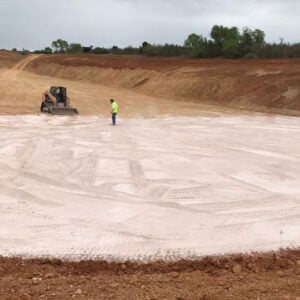
When properly applied and compacted, sodium bentonite forms a dense, low-permeability layer.
Here’s what happens:
- Water hydrates the clay
- The clay expands
- It fills voids and cracks
- A watertight barrier forms
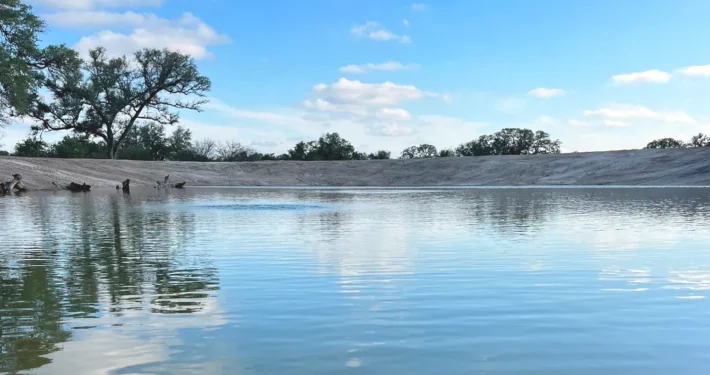
The result: water stays in your pond instead of soaking into the ground.
How Much Bentonite Do You Need?
The amount depends on your soil type.
General guidelines:
- Sandy soil: 3–5 lbs per sq ft
- Loamy soil: 2–3 lbs per sq ft
- Clay soil: 1–2 lbs per sq ft
Example:
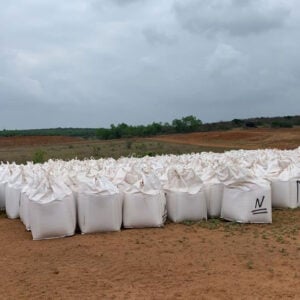
A 1-acre pond may require 50–150 tons depending on conditions.
Pro tip: Underestimating is one of the most common reasons pond sealing fails.
Application Methods
1. Blanket Method (Best Option)
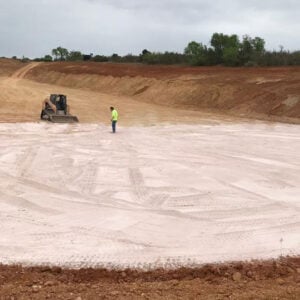
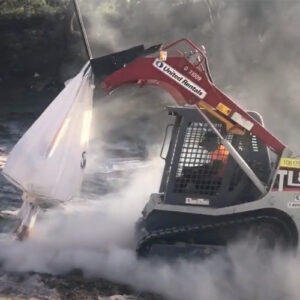
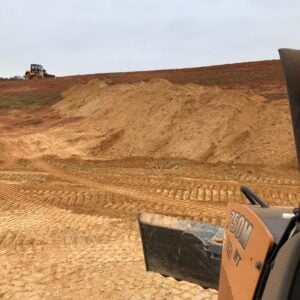
Spread bentonite evenly over the soil
Mix into top 4–6 inches
Compact thoroughly
✔ Most reliable
✔ Best for new ponds or full renovations
2. Sprinkle Method (For Existing Ponds)
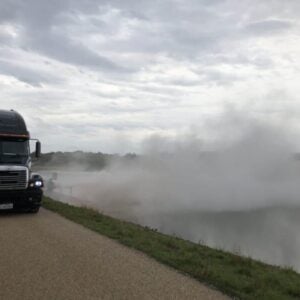
Apply directly over water surface
Bentonite settles into leaks
✔ Quick fix
❌ Less consistent results
Best Soil Types for Bentonite
Sodium bentonite works best in:
- Sandy soils
- Gravelly soils
- Porous ground
It may be less effective in:
Already heavy clay soils (sometimes unnecessary)
Common Mistakes to Avoid
Avoid these and you’ll save time and money:
- Using calcium bentonite instead of sodium bentonite
- Applying too little material
- Not compacting the soil
- Skipping proper soil preparation