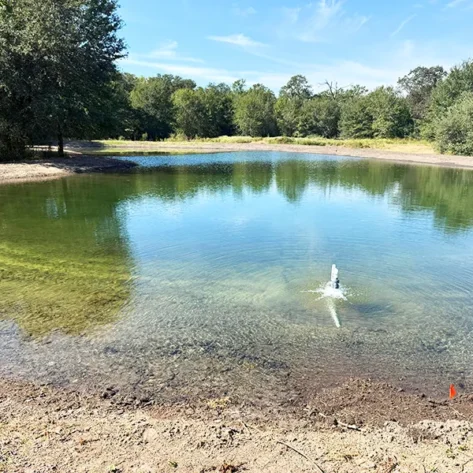
Sodium bentonite works as a pond sealer because it absorbs water and expands several times its dry volume, forming a dense clay gel that fills pores, cracks, and permeable soil layers. This swelling action creates a low-permeability barrier that prevents water from leaking out of ponds, lakes, and reservoirs.
Bentonite pond sealer is broadly used to prevent seepage in ponds and lakes; however, on some occasions, it doesn’t work. On those occasions, “how it’s installed” is the reason behind the failure. Even when bentonite has been promoted as a quick fix for leaks, the data and experience show that it works best when applied as a full-coverage clay liner using the blanket method.
Let me explain when bentonite works, when it fails, and the right installation process to achieve long-term water retention.
Why Bentonite Is the Best Pond Sealer
Sodium bentonite is considered one of the best pond sealers because it absorbs water and expands up to several times its dry volume. This swelling clay fills soil pores, cracks, and permeable layers, creating a dense natural liner that prevents water from leaking out of ponds and lakes.
How Does Bentonite Seal a Pond?
Bentonite seals ponds through a simple natural process:
• Sodium bentonite absorbs water rapidly
• The clay expands several times its original size
• The swelling clay fills soil pores and cracks
• A dense low-permeability barrier forms
• Water can no longer seep into surrounding soil
What Is Sodium Bentonite?
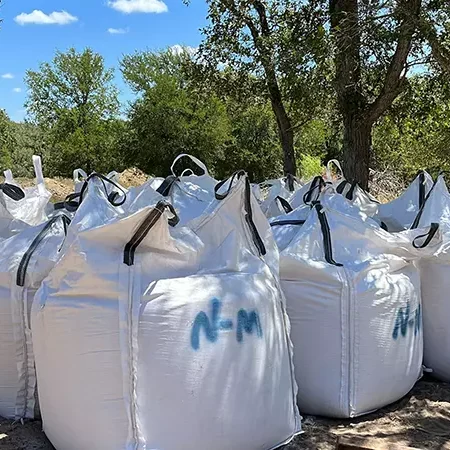
Sodium bentonite is a natural clay that expands significantly when hydrated. When mixed and compacted with the pond soil and water, it forms a dense, low-permeability barrier that prevents water from escaping through the soil.
Key requirement:
Bentonite must be uniformly distributed and confined, and the amount of bentonite per square inch should be indicated by the manufacturer to perform reliably.
Three Bentonite Application Methods (Ranked by Success)
Sprinkle Application (Low Success )
Sprinkling bentonite over visible leaks often fails because:
* Water carries clay away.
* Leaks originate below the surface.
* No confinement or compaction exists.
* It is difficult to measure the area and depth of the leak.
Use only if it is not possible to drain the pond.
Mixed-Soil Method (Moderate Success)
Bentonite is mixed into surface soil and compacted.
Works best for:
* New ponds
* Clay-heavy soils
* Moderate seepage
Limitations include uneven distribution and future soil movement.
Blanket Method (Highest Success)
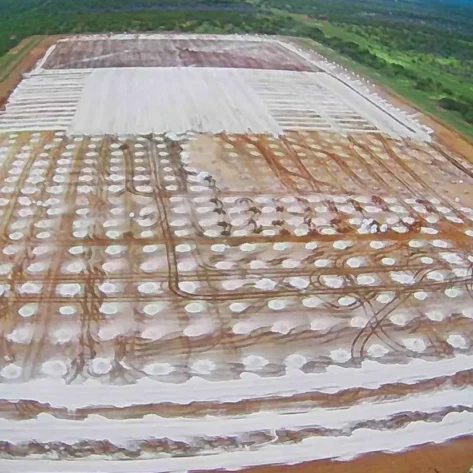
A continuous layer of bentonite is installed across the entire pond bottom and capped with soil.
Why this works best:
* Eliminates hidden seepage paths
* Bentonite behaves like a natural clay liner.
* Uniform swelling creates a consistent seal.
This is the recommended method for most ponds and all large ponds.
Bentonite vs Other Pond Sealing Methods
How Much Bentonite Is Needed to Seal a Pond?
The amount of bentonite needed depends on soil type
Typical blanket-method rates:
* 2–3 lbs/sq ft → clay soils
* 3–5 lbs/sq ft → Loam soilss
* 5–7 lbs/sq ft → sandy or fractured soils
Under-application is the most common cause of failure.
When Bentonite Is (and Isn’t) the Right Solution
Good fit:
* Ranch & livestock ponds
* Agricultural reservoirs
* Large ponds & lakes
Not ideal:
* Structural sinkholes
* Active underground voids
* Unstable foundations without preparation
* Wells
* Basements
Final Recommendation
Bentonite pond sealer is not a sprinkle-on fix, but a construction material that works best as a full-coverage clay liner that provides durable and cost-effective water retention when installed correctly.